


Surgical Services
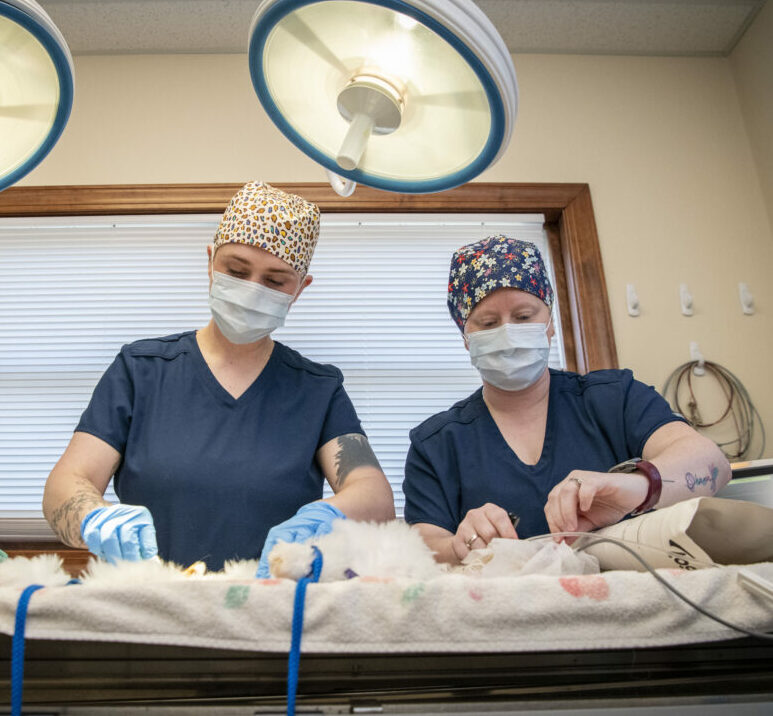
Lazy 5 Vets takes preventative steps to ensure our surgeries are safe, painless, and effective, without ever compromising quality. Top-of-the-line surgical equipment and anesthesia allow us to perform a range of basic to advanced procedures.
Types of surgeries performed:
- Spay and Neuter
- Lacerations and Abscesses
- Tumor Removal
- Orthopedic (bone)
- Abdominal
- Ear/Eye
- Reproductive
Contact us today to speak with our trained staff about veterinary surgery and available procedures.
Prophylactic Gastropexy
What Is Bloat (GDV)?
- A life-threatening emergency condition
- The stomach fills with gas and twists
- Twisting cuts off blood flow to vital organs
- Can lead to shock and death quickly
- Requires immediate emergency treatment
What Is a Prophylactic Gastropexy & What Does It Prevent?
- A preventive surgical procedure
- The stomach is permanently attached to the body wall
- Prevents the stomach from twisting (prevents GDV)
- Greatly reduces the risk of fatal GDV
- Less than 10% may still develop simple bloat (gas only)
- Without twisting, this is far less dangerous
- Often managed medically without major emergency surgery
- Done before an emergency occurs
Incisional Gastropexy Performed by Dr. Wilkie
- Proven and reliable surgical technique
- Creates a strong, permeant stomach attachment
- Can be performed during spay or neuter
- Can also be done as a stand-alone procedure
- Outpatient procedure — dogs go home the same day
Recovery & What to Expect
- Outpatient procedure
- E-collar and/or recovery shirt required for 10-14 days
- Smaller, more frequent meals for 3-4 days
- Activity restriction for 10-14 days
- Pain is usually mild and well controlled
Schedule a Surgical Consultation
- Call to schedule a consultation with Dr. Wilkie
- Determines if your dog is a good candidate
- Consultation fee credited toward surgery when performed
Dr. Wilkie has a special interest in soft tissue surgery and is experienced performing prophylactic gastropexy. She is not a board-certified veterinary surgeon. Referral to a board-certified surgeon or for laparoscopic gastropexy can be arranged upon request; specialist care typically involves higher costs.
Spay & Neuter
What Is a Spay or Neuter?
- Spay: surgical removal of the ovaries and uterus in females
- Neuter: surgical removal of the testicles in males
- Routine, preventative procedures performed under anesthesia
- Commonly done at a young age but can be performed later in life
What Are the Benefits?
- Prevents unwanted pregnancies
- Reduces risk of certain cancers and infections
- May decrease roaming, marking, and other behaviors
- Helps pets live longer, healthier lives
Recovery & What to Expect
- Proven and reliable surgical technique
- Creates a strong, permeant stomach attachment
- Can be performed during spay or neuter
- Can also be done as a stand-alone procedure
- Outpatient procedure — dogs go home the same day
Lacerations & Abscesses
What Are Lacerations & Abscesses?
- Lacerations: cuts or tears in the skin
- Abscesses: localized pockets of infection under the skin
- Often caused by trauma, bites, or foreign objects
- Can worsen quickly without treatment
How Are They Treated?
- Through cleaning and flushing of the affected area
- Surgical repair or closure when necessary
- Drain placement may be required for abscesses
- Antibiotics and pain management provided
Recovery & What to Expect
- Most cases are treated as outpatient procedure
- Bandage care or wound monitoring may be needed
- E-collar recommended to prevent licking or chewing
- Follow-up visits may be required for proper healing
Tumor Removal
What is Tumor Removal?
- Surgical removal of masses or abnormal tissue
- May involve skin, soft tissue, or internal organs
- Recommended for both benign and potentially cancerous growths
- Early intervention often leads to better outcomes
Why Is It Important?
- Prevents growth or spread of abnormal cells
- Improves comfort and mobility
- Allows for diagnostic testing (biopsy)
- Can be curative in some cases
Recovery & What to Expect
- Most procedures are outpatient, depending on complexity
- Incision care and activity restriction required
- Monitoring for swelling or changes is important
- Follow-up may include lab results or additional treatment
Orthopedic (Bone) Surgery
When Is Orthopedic Surgery Needed?
- Ligament injuries (such as cruciate/ACL tears)
- Joint instability or development conditions
- Trauma-related injuries
What Does Surgery Involve?
- TTA (tibial tuberosity advancement) cruciate repairs performed by a board certified surgeon
- Sercuros cruciate repair offered by Dr. Julian for select smaller dogs
- OFA certifications with sedated radiographs
- FHO (femoral head ostectomy) procedures
- Focus on restoring normal function and comfort
Important Note
- Fractures are typically stabilized with a splint when appropriate
- Advanced fracture repair (plates, pins, and screws) is referred to a specialist
Recovery & What to Expect
- Longer recovery compared to routine procedures
- Strict activity restriction is critical
- Pain management and follow-up imaging may be required
- Gradual return to normal activity over time
Perineal Urethrostomy (PU procedure)
What is Perineal Urethrostomy (PU)?
- A procedure to unblock cats with urinary obstruction
When is Perineal Urethrostomy Used?
- Perineal Urethrostomy is used in recurrent or emergency cases
Abdominal Surgery
What Conditions Require Abdominal Surgery?
- Foreign body ingestion (objects stuck in the stomach/intestines)
- Intestinal blockages
- Bladder stones or urinary issues
- Organ disease or emergency conditions
- Preventative gastropexy (stomach tacking) in at-risk breeds
What Does the Procedure Involve
- Surgical access to the abdominal cavity
- Identification and correction of the underlying problem
- Careful monitoring during and after surgery
- Often performed in urgent or emergency situations
Recovery & What to Expect
- May require short-term hospitalization
- Gradual return to normal feeding
- Activity restriction during healing
- Close monitoring for complications
Ear & Eye Surgery
What Conditions Are Treated?
- Eyelid abnormalities (entropion)
- Cherry eye (gland prolapse)
- Severe eye injury or disease requiring enucleation
- Conditions causing pain, irritation, or vision problems
What Do These Procedures Involve?
- Correction of structural abnormalities
- Removal of diseased tissue or eye when necessary
- Procedures tailored to the specific condition
- Focus on relieving discomfort and restoring function
Recovery & What to Expect
- E-collar required to protect surgical sites
- Medications such as eye drops may be prescribed
- Follow-up visits to monitor healing
- Most pets experience significant improvements in comfort